

A Hub For Telehealth Visits
A central console serving as the heart of a telehealth platform


In a Nutshell
Amwell provides comprehensive telehealth solutions for health systems, health plans, employers and physicians. With the rise in telehealth adoption and the growth of our company it became more and more challenging for our legacy product to evolve and scale to the increase in demand.
Our video console was central to our offering and we knew it would have to be reimagined. We needed to create a single meeting place for virtual care. We need to allow for providers and patients to easily connect via video, audio and chat. We also needed to enable organizations to customize and scale their telehealth programs within a flexible framework that accommodates a wide range of form factors modalities and health care micro-apps. Ultimately what we set out to do marked the beginning of Converge, Amwell’s next generation of telehealth products.
The Task
As a first step in envisioning Converge, Amwell’s next generation telehealth platform, my team product design team was tasked with redesigning the heart of the system - its visit console.
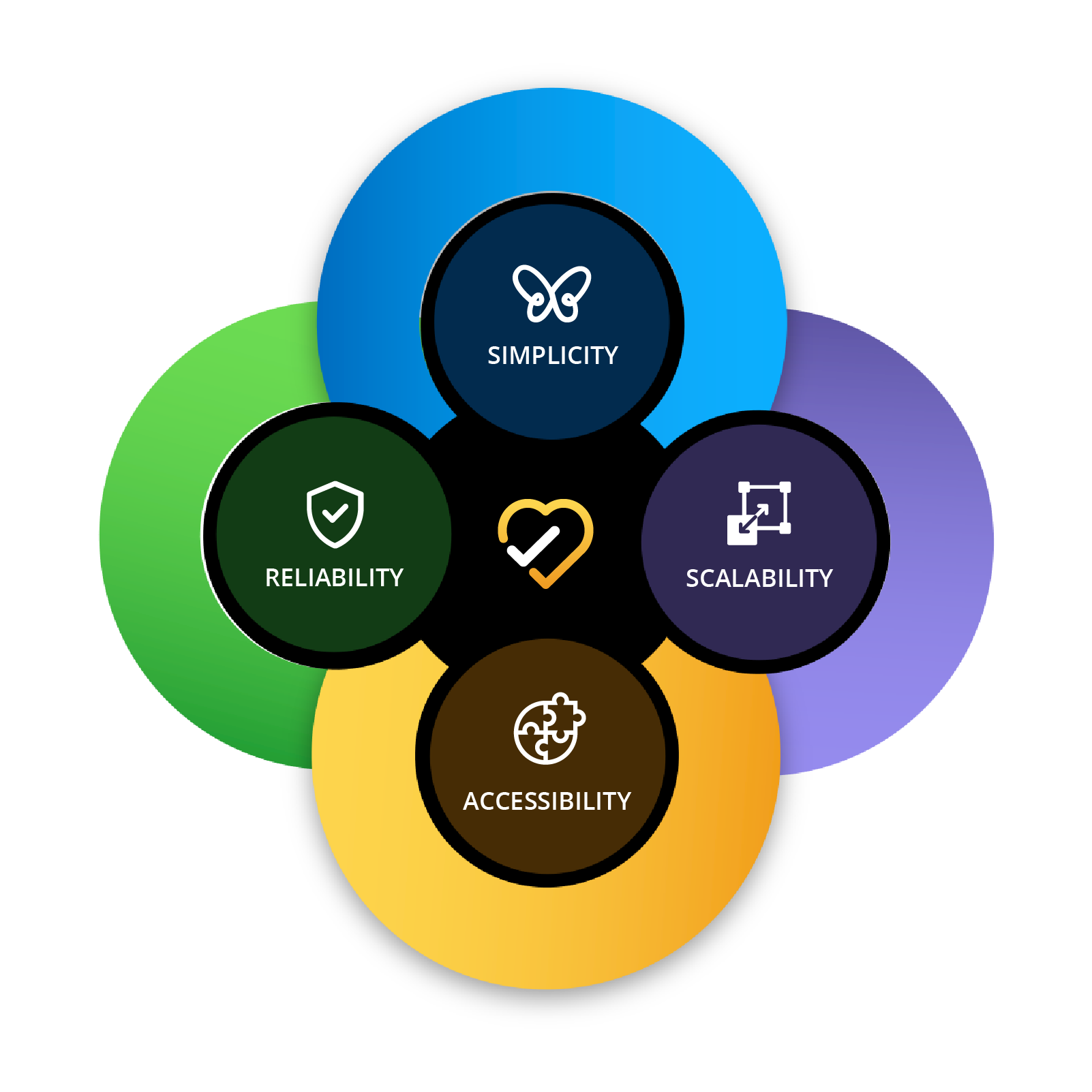
Simplicity, accessibility, reliability and scalability were the key tenets, as the visit console would serve as the central hub for real-time communication for all telehealth visits.
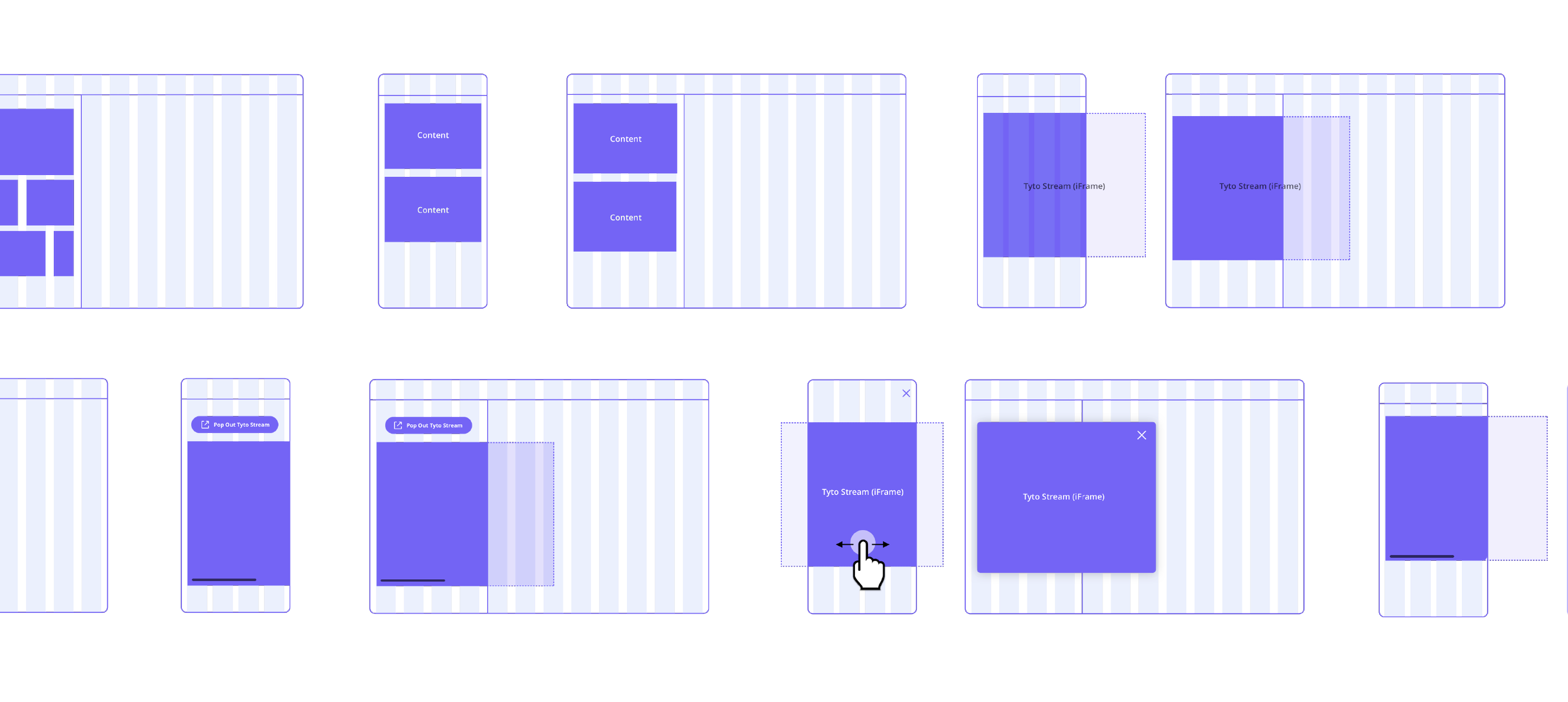
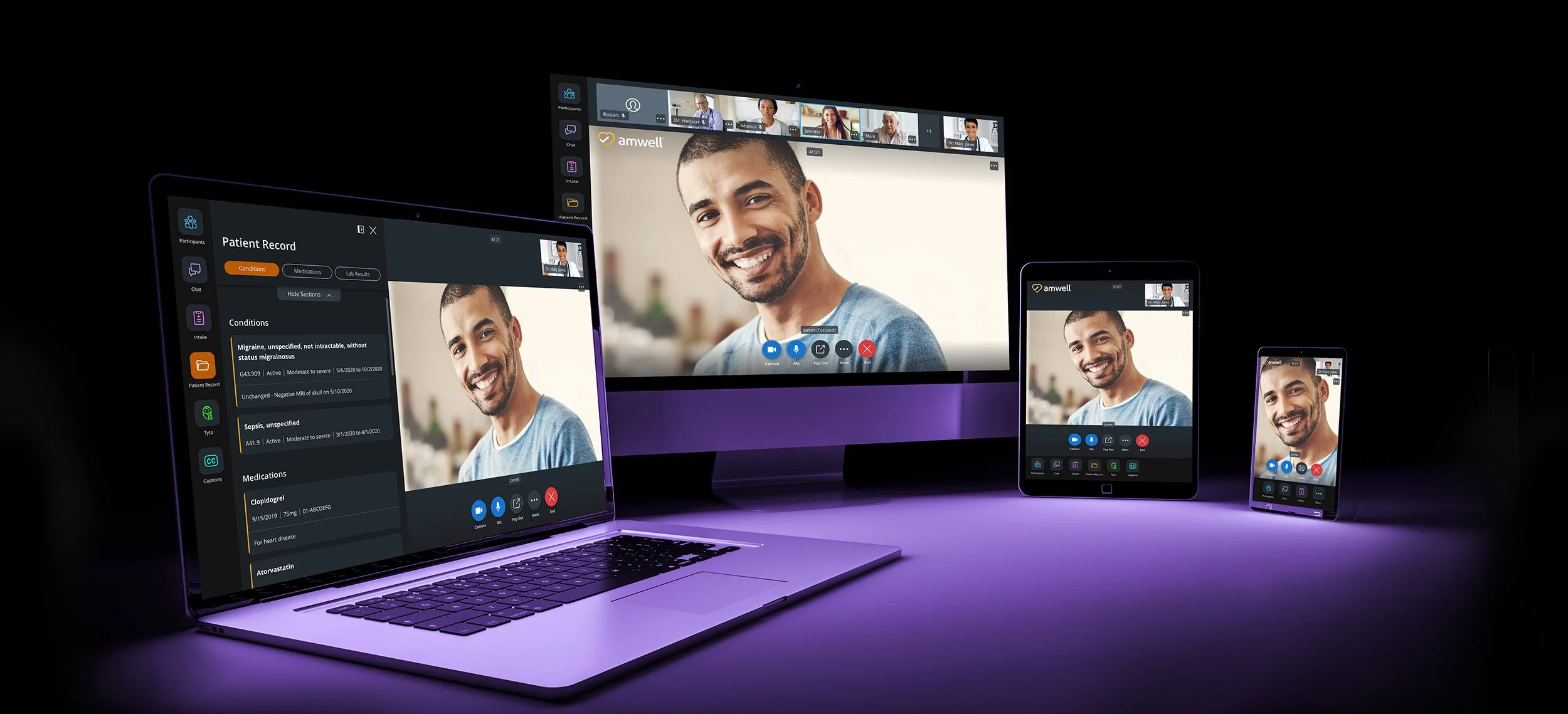
The visit console had to be responsive, supporting visits on small mobile devices, tablets, laptops and large displays while also providing access to a host of healthcare micro-apps to facilitate care during the visit. The UI also had to be accessible, adhering to WCAG 2 AA standards.
The Process
The goal of the first phase was to validate and elaborate on a front-end strategy for the visit experience while leveraging cutting edge technology. We knew it had to accommodate any combination of in-visit tools, which required us to establish a solid, scalable framework for visit experiences for years to come.
It also needed to have the ability to upgrade components independently over time. And finally, we had to account for the integration of provider-to-provider consultation features
User Research
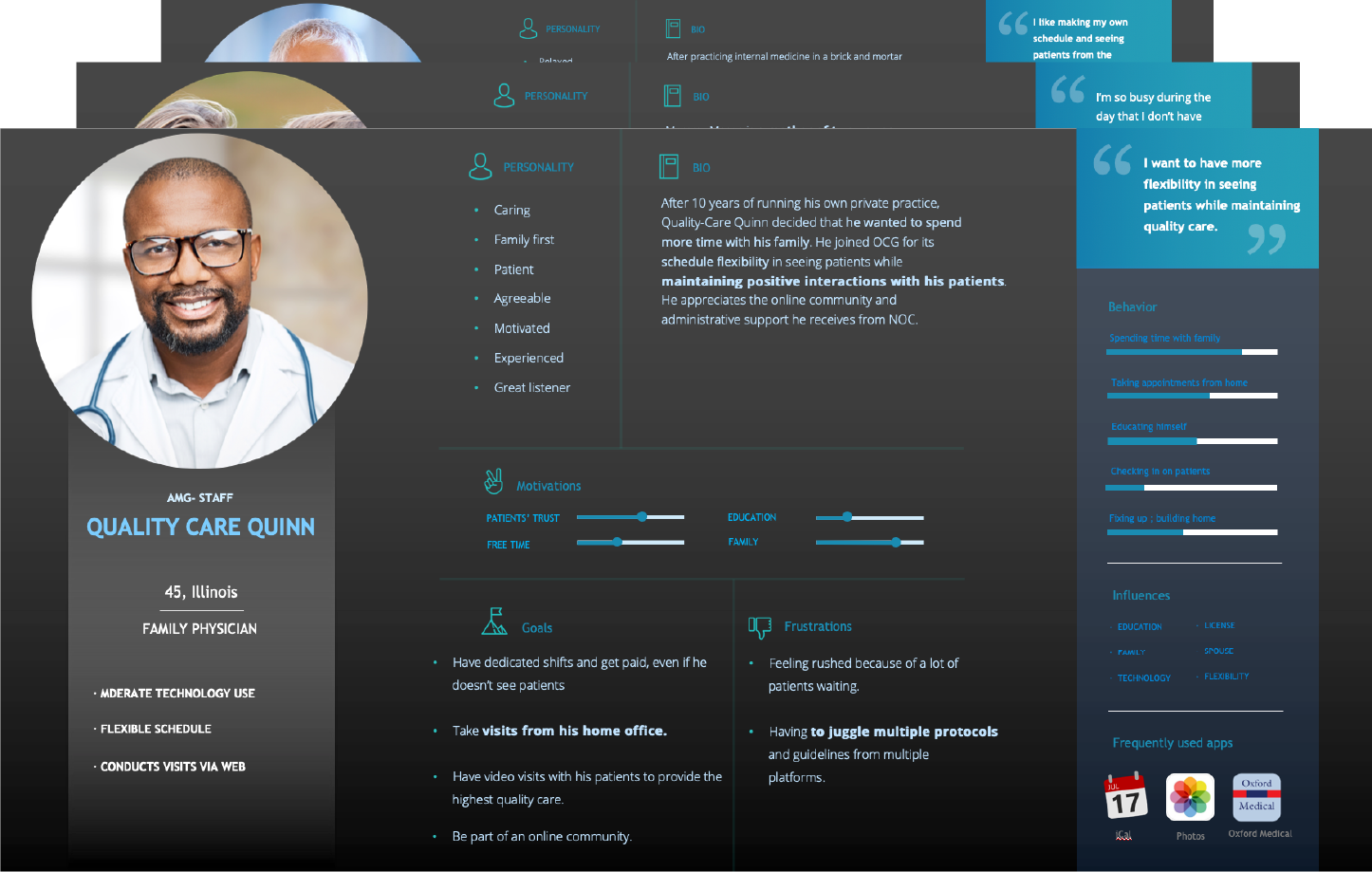
The process began by reaching out to our users, both patients and providers, to conduct a series of research studies. These studies built upon the significant existing research and insights already compiled by the team.
Architecture
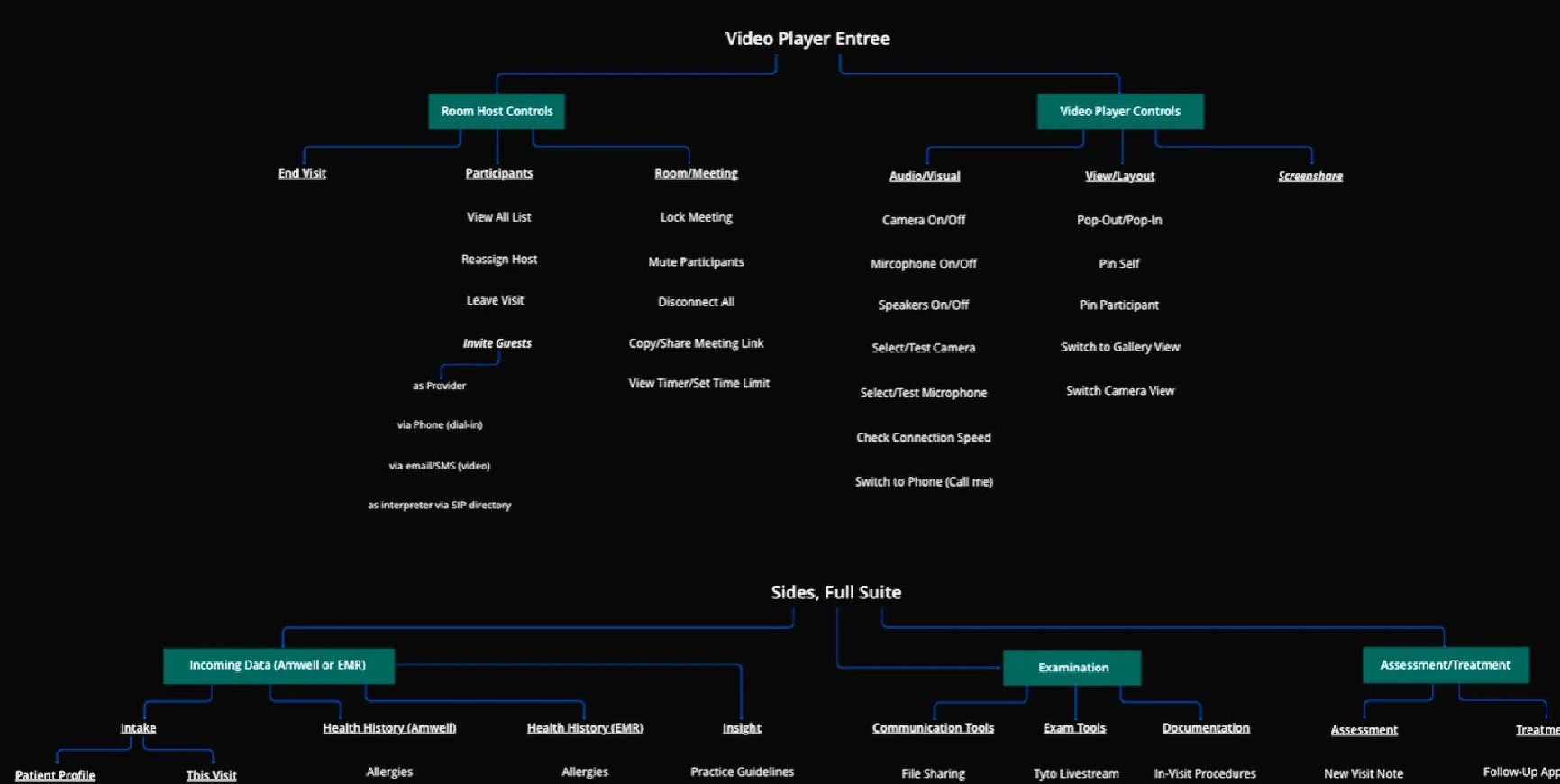
Next, we developed the initial information architecture and navigational hierarchy based on providers’ needs and mental models of providing care via telehealth. We then aligned that strucuture with the patient perspective.
UI Strategy
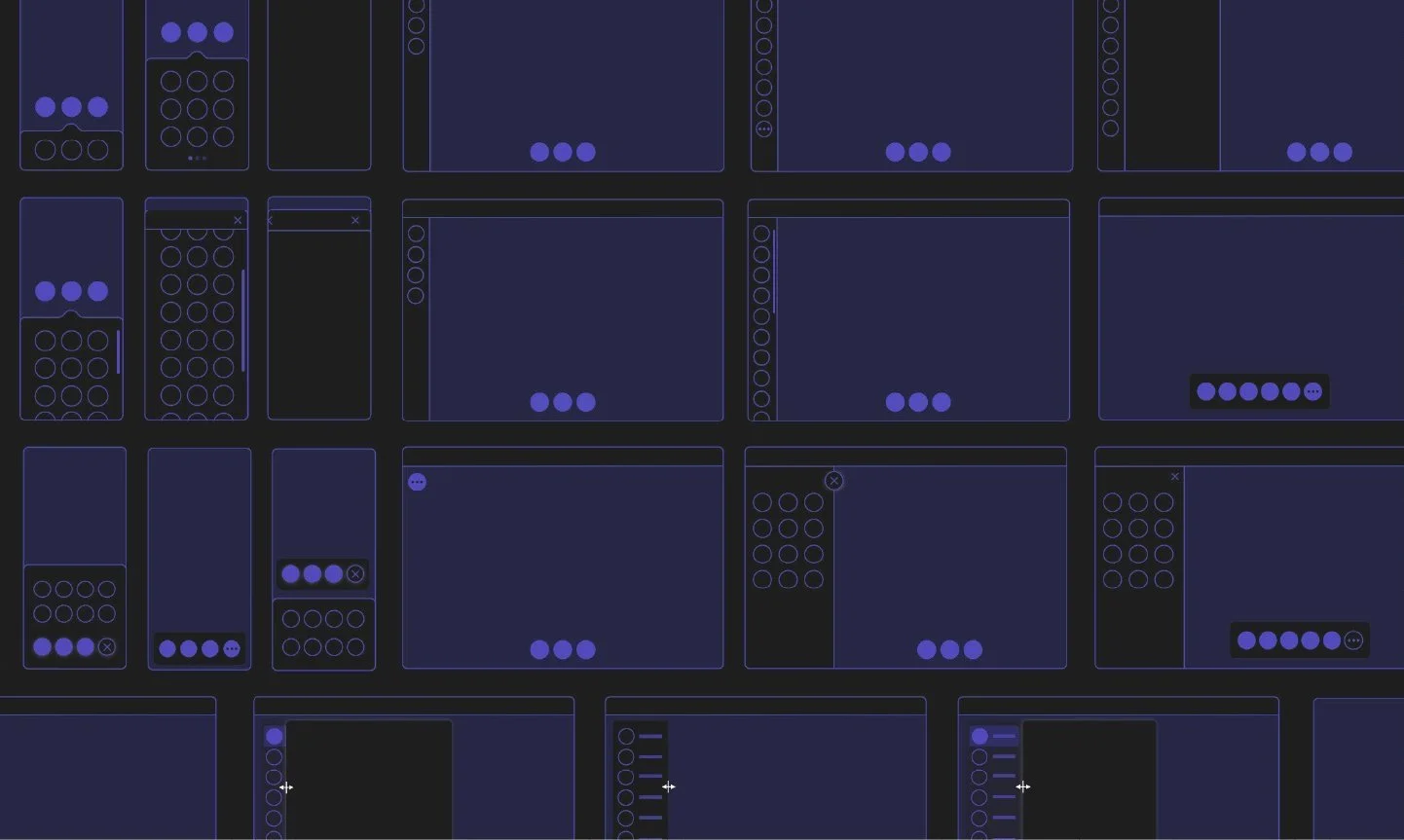
We created a broad set of exporations and flexible frameworks which could support mulitple orientations, while being scalable and customiziable to support a wide array of data and widgets.

The Sprint
Equipped with research, and information architecture and UI strategy, I continued to gather research and inspiration in preparation for a 2 week design sprint. My role was to lead a small team of contracted product designers in collaboration with our project managers and engineering partners in an effort to build a proof of concept which we would present to the executive steering committee.
For our first week I conducted a series of workshops to onboard and collaborate with the team to conceptualize and establish our core structure, framework and design patterns for the visit console. Upon alignment with product and buy-in from leadership on direction, we shifted to collaborated closely with engineers to implement while further prototyping and detailing our work.
By the end of our sprint we succeeded in creating functional proof of concept, foundational requirements, technology considerations and conceptual designs.
The Solution
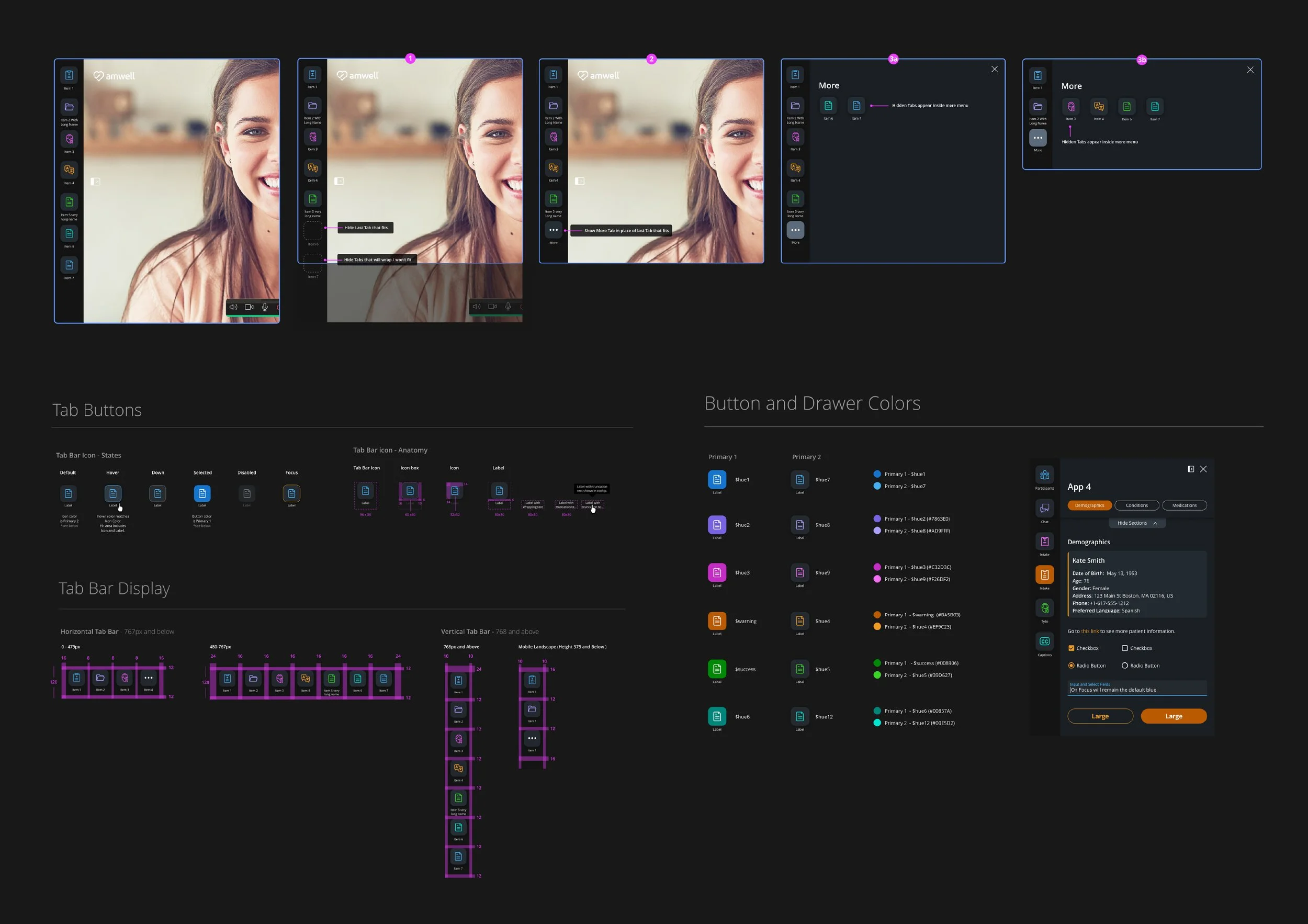
Upon executive evaluation of the proof of concept, we received the green ligh on our approach. Our initial sprint was followed by months of larger teams detailing requirements, planning implementation, creating extensive detailed designs, conducting user testing, selecting a vendor for our video service, piloting, launching the product and rapidly improving the experience via constant customer feedback.
The Result
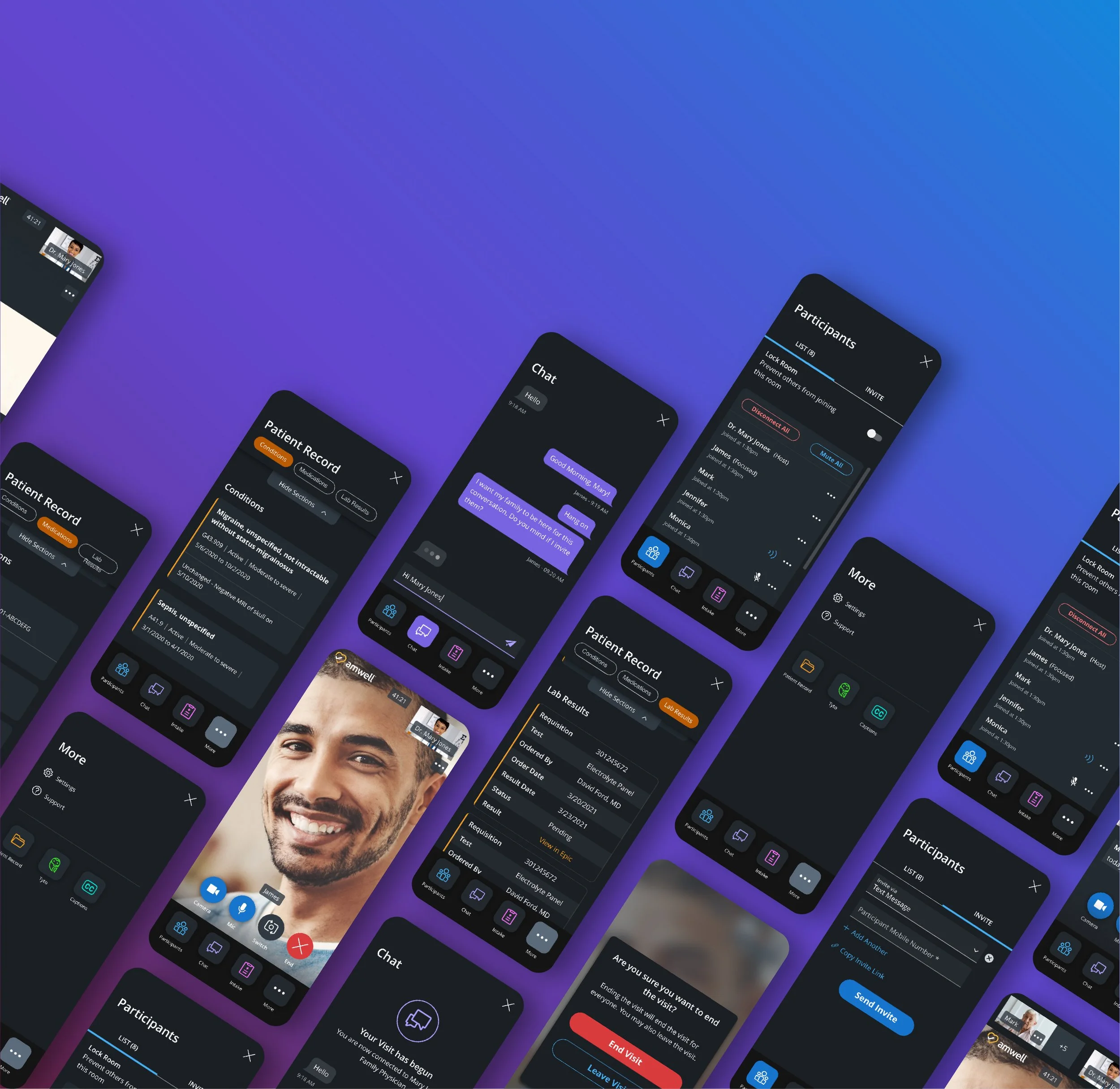
The end result is a scalable and fully responsive, accessible, web-based framework that accommodates, video, audio and chat visits while also enabling custom patient-facing and provider-facing experiences with access to a nearly infinite number of healthcare applications during the visit. Our work shaped what was to become our next generation of telehealth products called Converge.